Most leadership failures are not caused by a lack of technical competence. They happen when stress rises and relationships deteriorate: a reactive message escalates tension, a difficult conversation is avoided until it becomes a crisis, or a team stops speaking up because it does not feel safe. In those moments, leadership is tested less by what you know and more by how you regulate yourself, read others, and respond with clarity.
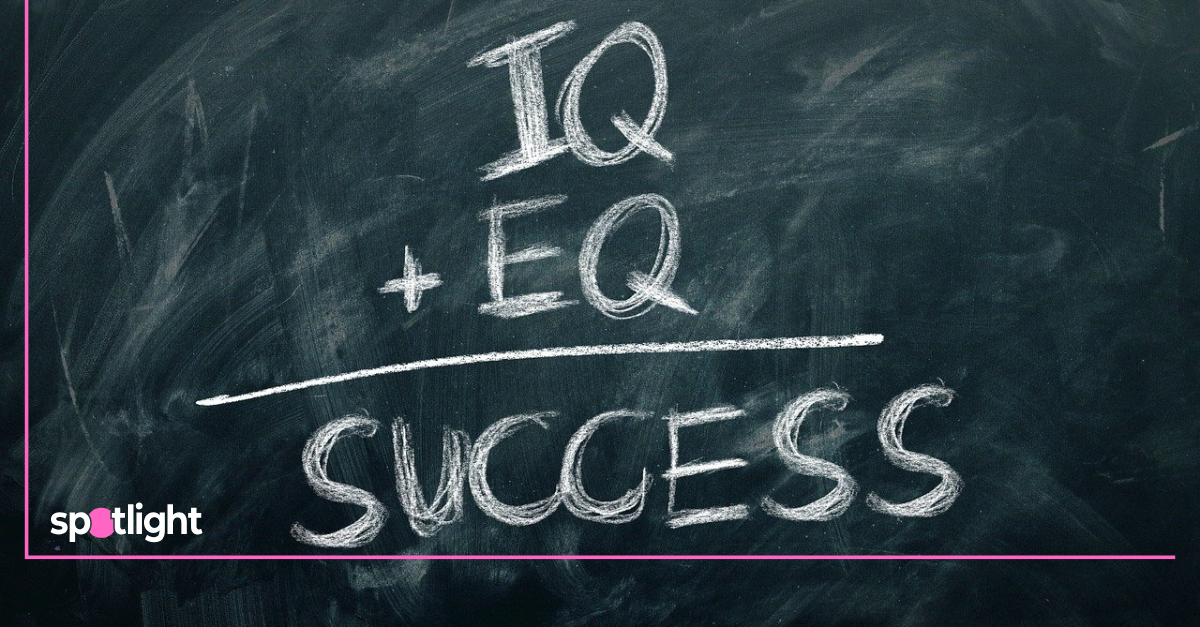
That is why emotional intelligence is not a “soft” add-on. It is the operating system behind trust, accountability, and execution.
Emotional intelligence in leadership terms
According to an online course in emotional intelligence, business success is strongly influenced by qualities like perseverance, self-control, and the ability to get along with others – and emotional intelligence is the practical ability to understand and manage emotions in positive ways to reduce stress, communicate effectively, empathize, overcome challenges, and defuse conflict.
Emotional intelligence (EQ) becomes leadership when it shows up as consistent behavior in real situations. In practice, EQ is the ability to:
- Notice what you are feeling and how it is affecting your tone, attention, and decisions
- Regulate your response so you lead intentionally instead of reacting impulsively
- Understand what others are experiencing beneath their words (concerns, needs, motivations)
- Manage relationships through clear communication, constructive feedback, and healthy conflict
EQ is not avoiding hard conversations. It is having them with control, respect, and focus on outcomes.
What EQ directly improves in leadership
Trust and psychological safety
Teams move faster when they feel safe to surface problems early. Leaders with strong EQ build safety through calm responses, curiosity, and consistent fairness. They do not punish bad news. They use it.
Practical behaviors:
- Ask before judging: “What happened – and what did we miss?”
- Separate the person from the problem
- Repair quickly after missteps: “I handled that poorly. Let’s reset.”
Business result: fewer hidden risks, faster problem-solving, better quality decisions.
Decision-making under uncertainty
Uncertainty triggers emotion. Emotion can sharpen attention or distort judgment. EQ helps leaders slow down the moment between stimulus and response, especially when stakes are high.
Practical behaviors:
- Name the emotion: “I’m feeling urgency – but that doesn’t mean this is the top priority.”
- Ask for facts and alternatives before deciding
- Create a short pause for high-impact calls (even 2 minutes helps)
Business result: fewer costly pivots, better prioritization, more stable execution.
Conflict and difficult conversations
Conflict is inevitable. Without EQ, it becomes personal, political, or silently corrosive. With EQ, it becomes productive: disagreements stay focused on goals and data.
Practical behaviors:
- Use neutral language: “Here is what I’m seeing”
- Validate without surrendering standards: “I understand this is frustrating. We still need X by Friday.”
- Agree on next steps, not endless debate
Business result: less escalation, more alignment, fewer delays.
Motivation, feedback, and performance
Performance management is emotional, whether leaders admit it or not. People need clarity and standards, but also respect, meaning, and recognition. EQ helps leaders provide feedback that improves outcomes rather than triggering defensiveness.
Practical behaviors:
- Give feedback on behavior and impact, then make a clear request
- Recognize effort and progress, not only results
- Coach with questions: “What would make this easier to deliver?”
Business result: higher engagement, stronger ownership, better retention.
Change leadership and resilience
Change creates anxiety, and anxiety creates resistance. Leaders with EQ address the emotional layer instead of fighting it. They communicate what is known, what is unknown, and what will happen next—often supported by CRM software that helps centralize information and maintain consistent communication.
Practical behaviors:
- Acknowledge uncertainty directly
- Provide structure: priorities, roles, timelines
- Keep communication frequent and consistent
Business result: faster adoption, less burnout, fewer passive blockers.
The EQ leadership loop for everyday use
Leaders need a simple model they can apply in meetings, 1:1s, and crises. Use this four-step loop:
1) Notice
Scan for signals in yourself and others:
- tight tone, impatience, rushing, sarcasm
- silence, withdrawal, agitation, over-agreement
2) Name
Name the emotion and the need behind it:
- “I’m feeling defensive – I need clarity on expectations.”
- “You seem concerned – do you need more information or more time?”
3) Normalize
Validate the experience without lowering standards:
- “It makes sense this feels heavy. Let’s focus on what we can control.”
4) Navigate
Choose the best response for the goal:
- decide next steps
- clarify ownership
- set timing and follow-up
Three scripts leaders can use immediately
Script 1: De-escalation
“I can see that this matters. Let’s slow down for two minutes, so we solve the right problem.”
Script 2: Clarity with respect
“Here’s what I need, and here’s why it matters. What do you need from me to deliver it?”
Script 3: Repair after a miss
“I was too abrupt earlier. I want to restart this conversation with more clarity. Can we reset?”
Common EQ traps leaders fall into
High standards, low warmth
Results matter, but tone also matters. Cold clarity can produce compliance, not commitment.
Over-empathy without accountability
Understanding is not the same as excusing. EQ includes boundaries and expectations.
Avoiding conflict until it explodes
Avoidance is a short-term comfort that creates long-term damage.
Misreading silence as agreement
Silence often signals fear, confusion, or fatigue. Leaders with EQ check, not assume.
EQ is not optional for leadership
Leadership and emotional intelligence are inseparable because leadership is fundamentally relational. You can have strategy, expertise, and authority, but without emotional regulation, empathy, and effective communication, execution slows and trust erodes. The strongest leaders do not avoid emotion – they use it as data, manage it with discipline, and translate it into clarity, direction, and results.
If you choose one action this week, apply the EQ loop in one high-stakes conversation: notice, name, normalize, navigate. Over time, that consistency becomes your leadership signature.